Every season on Lake Ontario tells a story — and for me, that story really begins in late April on the Niagara Bar.
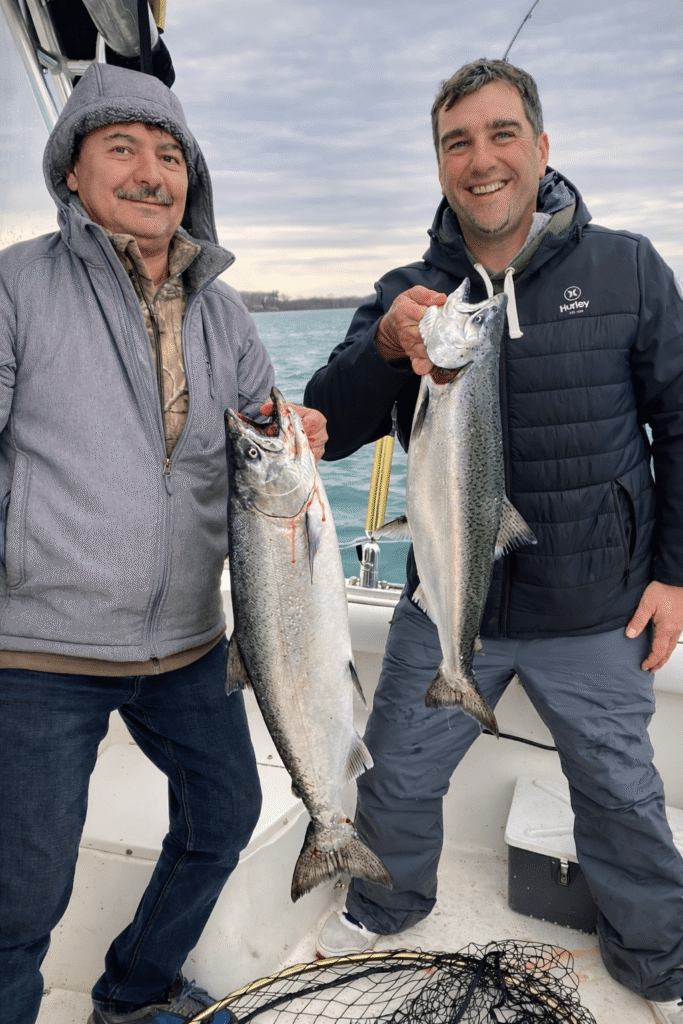
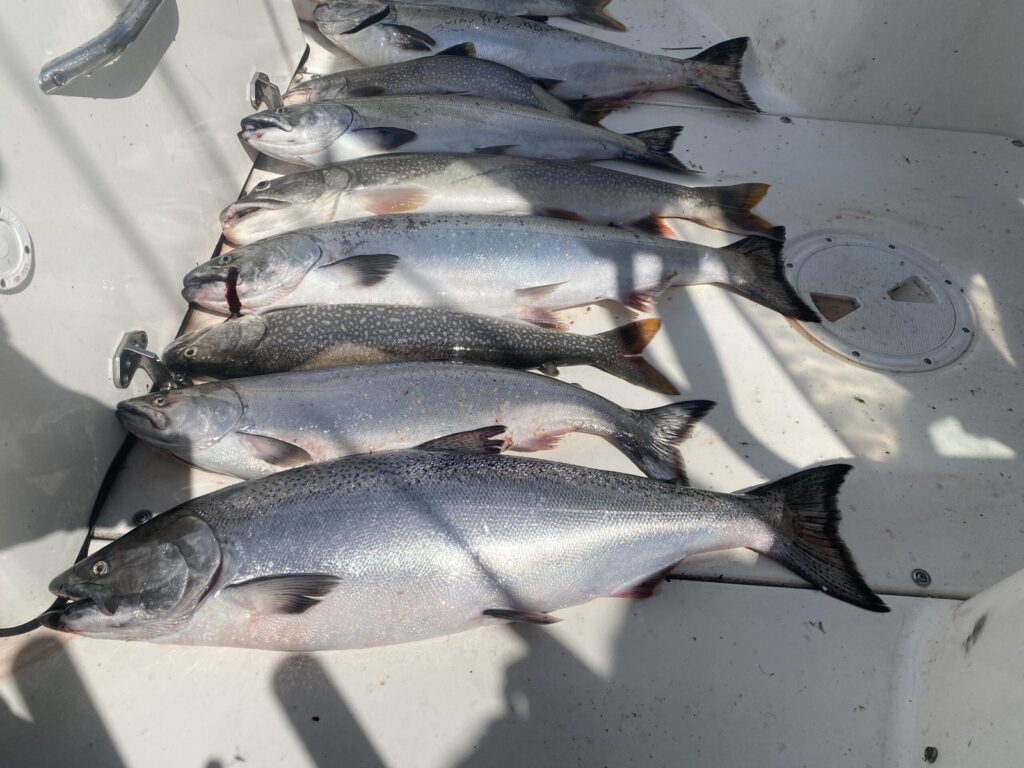
Late April through early May is when things start to come alive. Chinook and Coho salmon push through. Brown trout and Lake Trout slide along the ledge. The energy changes. The fish are feeding with purpose, and the way they set up during this window often shapes how the rest of the season unfolds.
This isn’t just another stretch of water. It’s where the Niagara River meets the lake — fast-moving river current blending with colder, clearer lake water. That mixing creates edges, seams, and temperature breaks that concentrate bait. And when bait stacks, predators aren’t far behind.
The Bar is dynamic. Depth can shift from 10 feet to 40+ feet quickly. One pass might be clean green water. The next could be stained or muddy depending on wind and river flow. It keeps you honest.
That’s why I rely on precision boat control. My Seaswirl Striper is agile enough to work tight contours and handle heavy current. Autopilot and GPS help me hold productive lines along the ledge while I focus on what really matters — temperature, speed at the lure, and how the spread is behaving in that current.
Spring on the Bar rewards attention to detail. If you’re dialed in, it shows.
In late April and early May, surface temperatures are usually in the low-to-mid 50s. That’s prime water for Chinook and Coho. Around that 53° range, they’re comfortable and actively feeding.
As that water creeps up into the upper 50s, fish often rise in the column. That means I’m constantly adjusting depth to match where they’re comfortable — not where I think they “should” be.
Surface readings are useful, but I care most about what’s happening at my lure depth. Current on the Bar can make surface and subsurface temperatures very different. Without accurate probe data, you’re fishing blind. With it, you can stay in the most stable water even when conditions shift.
Speed matters here — but not just boat speed.
Current on the Niagara Bar can push hard, especially when river flow is up. That’s why I focus on speed at the lure. I typically work in the 1.8 to 2.5 mph range, but that’s just a starting point.
I use S-turns and subtle zigzags to vary lure speed and depth naturally. On the inside of a turn, baits slow and drop slightly. On the outside, they speed up and rise. That change often triggers strikes from fish that are following but haven’t committed.
Salmon are wired to react to erratic movement. A straight line at one speed doesn’t always get it done. Controlled variation does.
The Niagara Bar can go from crystal clear to heavily stained in a short period of time. Lure color follows water clarity.
In clean water, I lean into natural tones — chrome, green, silver combinations that match alewife and smelt. Subtle flash. Clean profile.
When there’s stain or mud in the water, visibility becomes the priority. Chartreuse, Fire Tiger patterns, orange accents, and pink/white combinations all have their place. Coho especially respond well to brighter tones when the water has color.
Low-light periods — dawn or overcast mornings — are perfect for glow patterns. That added visibility gives fish something easy to track when light penetration drops.
The key is adjusting quickly. If the water changes, the spread changes.
I run them off Cannon Optimum downriggers that automatically track bottom. That keeps my presentations tight to structure without constantly worrying about snagging. On the Bar’s ledge, staying in the right zone is everything.
In clean water, stealth wins. Long leads off planer boards keep baits well away from the boat. Salmon and trout in 10 to 20 feet of water can be wary. Giving them space increases confidence bites.
If fish are holding slightly deeper, I’ll use downriggers to keep spoons clean and controlled at depth while boards cover higher water.
The Niagara Bar never fishes the same way twice. Water color shifts. Temperature breaks slide. Boat traffic moves through. I adjust constantly.
If the water muddies up, I may slide slightly deeper or change color contrast. If it clears, I stretch leads and quiet the spread. If temperature shifts, I reset rather than grind unproductive passes.
That flexibility is what keeps us around active fish instead of chasing yesterday’s pattern.
Late April and early May can bring boat traffic. The Bar draws attention — and for good reason.
Boat control matters just as much as lure choice. I stay disciplined on contour lines, aware of current direction and surrounding traffic, keeping the spread intact and fishing effectively even when things get busy.
It’s not about racing around. It’s about holding productive water with precision.
What happens on the Niagara Bar in late April and early May often sets the tone for the entire year.
You start to see where bait is positioning. You learn how fish are responding to temperature bands. You refine speed windows and lure profiles that will evolve as the lake warms.
Spring fishing here isn’t random. It’s deliberate. Temperature awareness. Controlled speed. Adaptive color choices. Precise boat handling along structure.
When it all comes together — current, temperature, bait, and presentation — the rods don’t just fire once. They stay active.
And that’s when you’re reminded why this early window is one of the most important stretches of the entire Lake Ontario season.