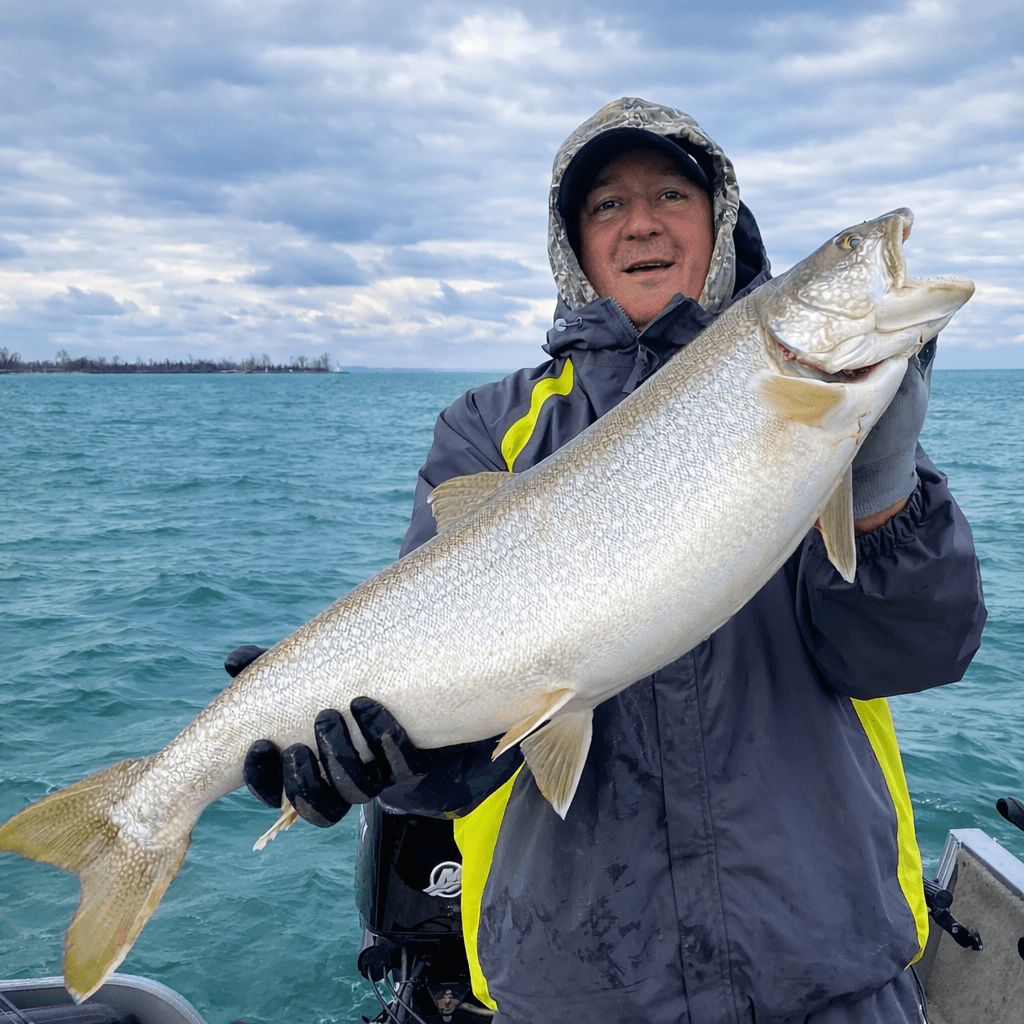
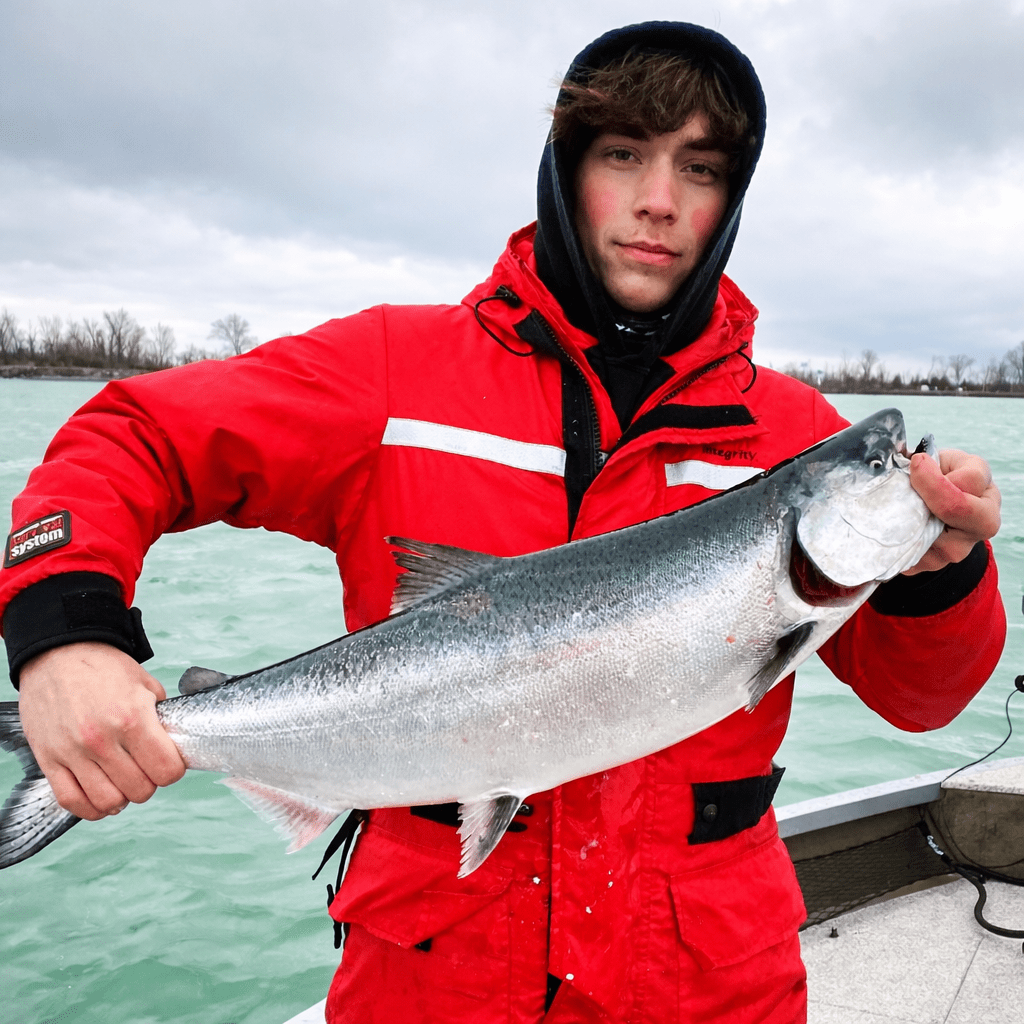
When I think about spring fishing out of Port Dalhousie, I think shoreline.
From March through early May, salmon and trout don’t need deep water. The surface layer of Lake Ontario is still cold enough that they can comfortably move shallow without stress. What pulls them in isn’t depth — it’s temperature, water color, and bait.
Most of my early-season trolling happens in 5 to 15 feet of water. I’m not running miles offshore hoping to intercept something. I’m working defined stretches of shoreline, watching subtle contour changes, small drop-offs, and any pocket where slightly warmer or stained water collects. Creek influence, mudlines, and even minor color shifts can stack bait for short windows. When that warmer water lines up with structure, salmon and trout slide right in.
In early spring, surface temperatures are usually in the 40s to low 50s. Later in the season, species start to separate based on preferred temperature ranges, but in spring they simply gravitate to the warmest water available. Sometimes that’s only a degree or two difference — and that’s enough.
I monitor temperature constantly. Surface readings help, but they never tell the full story. I rely on a Fish Hawk X4D probe to see exactly what’s happening at my lure depth. Nearshore water can change quickly with wind, and without accurate speed and temperature data, you’re guessing. Guessing doesn’t last long in cold water.
Cold fronts are part of fishing the west end. A north or northwest wind with rising pressure can cool the shoreline band fast — sometimes in just a few hours. When that happens, I don’t scrap the program. I adjust. Often it means sliding slightly deeper, maybe 5 to 20 feet more, until I reconnect with the warmest stable water. I’ll lengthen my leads, quiet the spread down, and focus on more subtle presentations. Post-front fish reward stealth over aggression every time.
Planer boards are the backbone of my shallow spring setup. They let me spread lines wide and keep baits well away from the boat — which is critical in clear water. Long leads help prevent spooking fish and allow stickbaits to track naturally. In tight shoreline water, stealth is everything.
As for presentations, I lean heavily on smaller stickbaits in the spring to match early-season forage. They work well at controlled speeds and have the right profile for fish that aren’t interested in chasing big meals yet. Dreamweaver Superslim spoons are another confidence bait for me. Their thinner profile and tighter action shine when fish are neutral. I rotate between natural tones in clear water and higher-contrast colors along mudlines or stained pockets.
Speed control is deliberate. I usually start around 1.9 to 2.2 mph, but I fine-tune based on how the bait is actually working — not just what a number says. If the lure isn’t tracking clean or showing the right action, I adjust. In cold water especially, I’d rather be slightly slower and precise than push too fast and lose that clean presentation.
Electronics tie everything together. Good sonar keeps me locked on productive contour lines instead of wandering. If temperatures shift dramatically after a wind event, I reset quickly rather than grinding unproductive water. Salmon and trout reposition with temperature and bait, and staying adaptable keeps you in that active zone.
Shoreline trolling out of Port Dalhousie in spring isn’t about running far or fishing deep. It’s about precision. Controlled speed. Accurate temperature data. Subtle presentations. Disciplined passes along structure.
When all of that lines up, the early shoreline bite can be one of the most exciting windows of the entire season — tight water, short strikes, and rods firing where most people assume it’s too shallow to matter.